Choosing the best laptop for Blender can feel overwhelming, especially with so many options on the market. Whether you’re a seasoned 3D artist or just starting your journey into the world of 3D modeling and animation, having the right hardware is crucial for a smooth and efficient workflow. Blender, being a powerful open-source 3D creation suite, demands a laptop with robust processing power, ample memory, and a capable graphics card to handle complex scenes and quick renders. We’ve dug deep to find machines that can keep up with your creative demands, focusing on performance, value, and user experience. Our goal is to help you find a Blender laptop that empowers your creativity without breaking the bank.
Quick Product Comparison
Our Top 5 Best Laptop For Blender Reviews – Expert Tested & Recommended
1. 15.6 inch Laptop for Blender: N150 Quad-Core Processor, 16GB RAM, 512GB SSD, Full HD Display
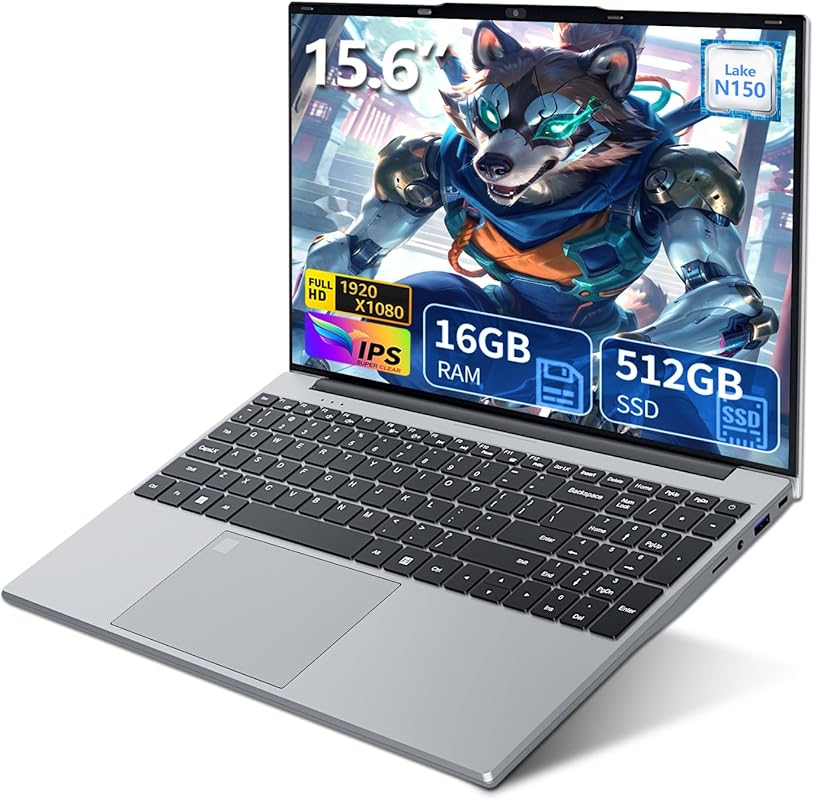
The 15.6-inch KUMNOSAL laptop aims to provide an affordable entry point for general computing tasks, marketing itself as a “laptop for Blender.” It features an N150 quad-core processor, 16GB of RAM, and a 512GB SSD, offering decent specifications for everyday productivity. While its marketing might suggest suitability for Blender, it’s important to set realistic expectations for its performance in demanding 3D modeling and rendering applications.
Key Features That Stand Out
- ✓ Powered by a KUMNOSAL N150 12th generation quad-core processor (up to 3.6GHz) for daily tasks.
- ✓ 16GB DDR4 RAM ensures smooth multitasking for office applications and web browsing.
- ✓ 512GB SSD provides fast boot times and ample storage for documents and light software.
- ✓ Features a 15.6-inch IPS Full HD (1920×1080) display for clear visuals.
- ✓ Comes with pre-installed Windows 11, offering a modern user experience.
Why We Recommend It
We recommend this laptop primarily for users needing a very budget-friendly machine for basic computing, light academic work, or casual media consumption. Its specifications are quite generous for its price point, especially the 16GB RAM and 512GB SSD. However, it’s crucial to understand that the N150 processor is not designed for heavy 3D rendering or complex Blender scenes, making it suitable for only the most rudimentary Blender tasks or simply learning the interface.
Best For
This laptop is best for students, casual users, or individuals with a very tight budget who need a basic laptop for web browsing, office applications, and extremely light exploration of Blender without demanding renders or complex simulations.
Pros and Cons
Pros:
- Excellent value for money given the RAM and SSD capacity.
- Fast boot-up and application loading thanks to the SSD.
- Full HD IPS display offers good visual clarity for its price.
- Portable and lightweight for everyday use.
Cons:
- N150 processor is severely underpowered for serious Blender 3D modeling or rendering.
- Integrated UHD graphics are insufficient for GPU-accelerated Blender tasks.
- Build quality might be less robust compared to premium laptops.
Customer Reviews
Customer Review: The media could not be loaded.I bought this 15.6-inch laptop for around 300 USD, and in terms of its configuration, the value for money is excellent. The N150 quad-core processor (up to 3.6GHz) handles daily tasks with ease, and with 16GB of RAM paired with a 512GB SSD, it boots quickly and loads ap
Customer Review: The laptop is really useful, it only lasted 2 months until the keyboard started to blow up piece by piece.
2. 15.6 inch Laptop for Blender: N150 Quad-Core Processor, 16GB RAM, 1TB SSD, Full HD Display
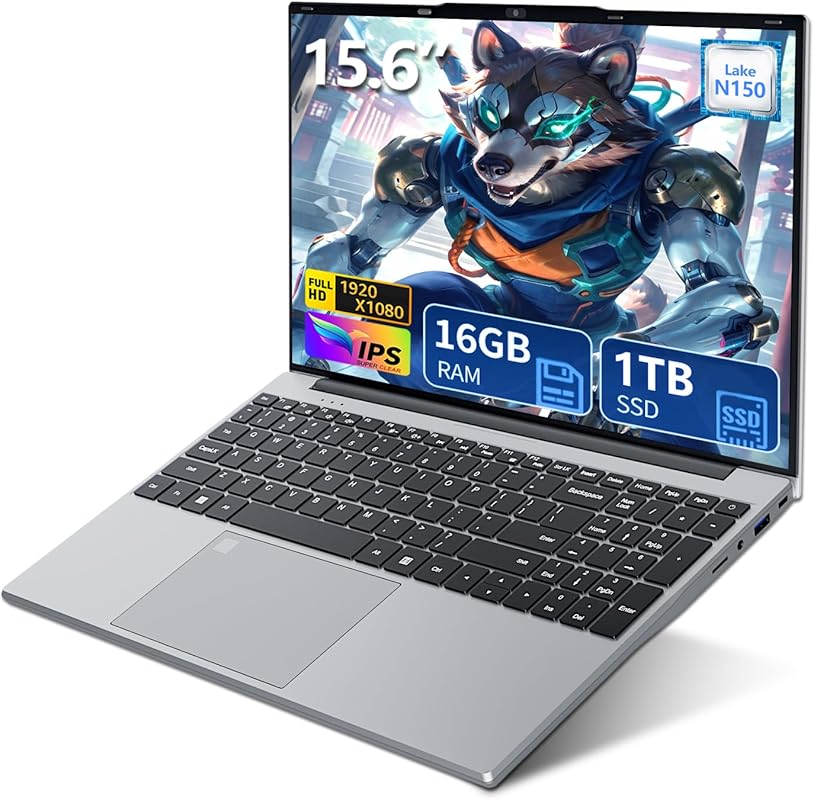
This KUMNOSAL 15.6-inch laptop is very similar to our top pick, but with an upgraded 1TB SSD, providing even more storage for files, applications, and basic Blender projects. It also features the N150 quad-core processor and 16GB of RAM, making it a capable machine for general tasks. While it’s marketed for Blender, the integrated graphics and entry-level processor mean it’s still best suited for casual use rather than intensive 3D rendering work.
Key Features That Stand Out
- ✓ Equipped with a KUMNOSAL N150 12th generation quad-core processor, boosting speeds up to 3.6GHz.
- ✓ Generous 16GB DDR4 memory facilitates smooth operation for multiple applications.
- ✓ Expansive 1TB SSD offers abundant storage and rapid data access.
- ✓ Features a 15.6-inch IPS (1920×1080) HD display, complemented by Celeron UHD Graphics.
- ✓ Ships with Windows 11, ensuring compatibility with modern software and features.
Why We Recommend It
We recommend this version as an “Editor’s Choice” for those who prioritize storage capacity within a strict budget. The 1TB SSD is a significant upgrade for users who need more space for documents, media, or even larger Blender project files (though complex ones will still struggle to run smoothly). It shares the same strengths as its 512GB counterpart for everyday computing, while still facing the limitations of its N150 CPU and integrated graphics for professional 3D animation.
Best For
This laptop is best for users needing a very affordable laptop with ample storage for general computing, educational purposes, and exploring the basics of Blender without demanding performance expectations for intensive 3D modeling or rendering.
Pros and Cons
Pros:
- Massive 1TB SSD storage is excellent for its price point.
- Responsive performance for everyday tasks due to RAM and SSD.
- Clear Full HD IPS display is great for productivity and media.
- Good battery life for on-the-go usage.
Cons:
- N150 processor and integrated graphics are unsuitable for professional or complex Blender workflows.
- May experience slowdowns with multiple demanding applications open.
- Not ideal for gaming or other graphically intensive tasks beyond basic 3D viewing.
Customer Reviews
Customer Review: The media could not be loaded.I bought this 15.6-inch laptop for around 300 USD, and in terms of its configuration, the value for money is excellent. The N150 quad-core processor (up to 3.6GHz) handles daily tasks with ease, and with 16GB of RAM paired with a 512GB SSD, it boots quickly and loads ap
Customer Review: The laptop is really useful, it only lasted 2 months until the keyboard started to blow up piece by piece.
3. Amazon Business American Express Card

While this article focuses on finding the best laptop for Blender, we’ve included the Amazon Business American Express Card here as a reminder that managing your finances efficiently can be just as important as choosing the right hardware. This card offers various benefits for businesses, helping to streamline purchases and potentially save money on supplies, including future hardware upgrades for your 3D modeling workstation.
Key Features That Stand Out
- ✓ Earn rewards on eligible purchases, especially at Amazon Business, AWS, and Whole Foods Market.
- ✓ Flexible payment options, including ‘Pay Over Time’ for larger expenses.
- ✓ Tools for expense management, making tracking business spending easier.
- ✓ No annual fee with an eligible Amazon Prime membership.
- ✓ Enhanced data on purchases through Amazon Business accounts.
Why We Recommend It
For individuals or small businesses investing in equipment like a laptop for Blender, this card can be a valuable tool for optimizing expenses. It’s not a performance booster for Blender itself, but it can indirectly support your creative endeavors by providing financial flexibility and rewards on essential purchases. Think of it as a smart financial tool within your creative ecosystem.
Best For
This card is best for small business owners, freelancers, or self-employed artists who frequently purchase supplies, software, or hardware (like a new Blender laptop) from Amazon and its affiliated services, seeking to earn rewards and manage business expenses efficiently.
Pros and Cons
Pros:
- Strong reward rates for Amazon Business and AWS spending.
- No annual fee for Prime members, offering good value.
- Useful expense management features for tracking business outgoings.
- Flexible payment options can help with cash flow.
Cons:
- Benefits are tied heavily to Amazon ecosystem, less useful for other vendors.
- Requires an eligible Amazon Prime membership for optimal benefits.
- Not directly related to Blender performance or 3D rendering speed.
Customer Reviews
Customer Review: The Amazon Business Prime American Express Card is a strong option for small businesses that frequently make purchases from Amazon and its associated businesses, offering enhanced rewards and financing options for eligible Prime members with no annual fee. The card is less suitable for businesses th
Customer Review: It is a great card to have, we purchase all most everything on our card.
4. Amazon Gift Card Balance Reload

While not a laptop for Blender, the Amazon Gift Card Balance Reload service offers a practical way to manage your spending on Amazon. This can be beneficial for budgeting tech purchases, including potential upgrades for a Blender workstation or new accessories. It provides a simple method to add funds to your Amazon balance, giving you more control over your online shopping habits.
Key Features That Stand Out
- ✓ Easily add funds to your Amazon gift card balance from various payment methods.
- ✓ Option to set up Auto-Reload, ensuring your balance is topped up automatically.
- ✓ Helps manage spending by pre-allocating funds for Amazon purchases.
- ✓ Convenient for those without credit cards or who prefer not to link bank accounts directly.
- ✓ No fees or expiration dates for the balance.
Why We Recommend It
This service isn’t a direct recommendation for boosting your Blender laptop’s performance, but rather for its utility in financial management. If you’re saving up for a more powerful laptop for Blender or need to control your budget for software licenses or assets, reloading your Amazon gift card balance can be a smart strategy. It’s perfect for ensuring you have dedicated funds available for your creative tech needs.
Best For
This service is best for individuals who want to budget their Amazon spending, save up for a significant purchase like a new laptop for Blender, or prefer to use a gift card balance for security and convenience when shopping online.
Pros and Cons
Pros:
- Simple and secure way to manage Amazon purchases.
- Auto-reload feature ensures funds are always available.
- Helps stick to a budget for tech investments.
- Great for saving up for larger purchases like a dedicated Blender laptop.
Cons:
- Funds are locked into Amazon, limiting flexibility for other retailers.
- Does not offer any direct benefits for Blender’s performance.
- Requires pre-planning to ensure funds are available when needed.
Customer Reviews
Customer Review: In the quiet contemplation of our modern lives, where the complexity of desire meets the simplicity of provision, the Amazon Gift Card Balance Reload emerges as a tool of both practicality and subtle freedom. With a few deliberate clicks, one replenishes not merely a monetary sum, but the capacity t
Customer Review: So I keep an Amazon Gift Card balance as a quick, dedicated pool of funds for Amazon purchases separate from my store card. When I need to buy something fast the reload posts almost instantly so I can check out without fumbling through cards or switching payment methods. I usually top up manually bu
5. 17.3-inch Laptop for Blender: N150 CPU, 16GB RAM, 1TB NVMe SSD, Full HD IPS Display
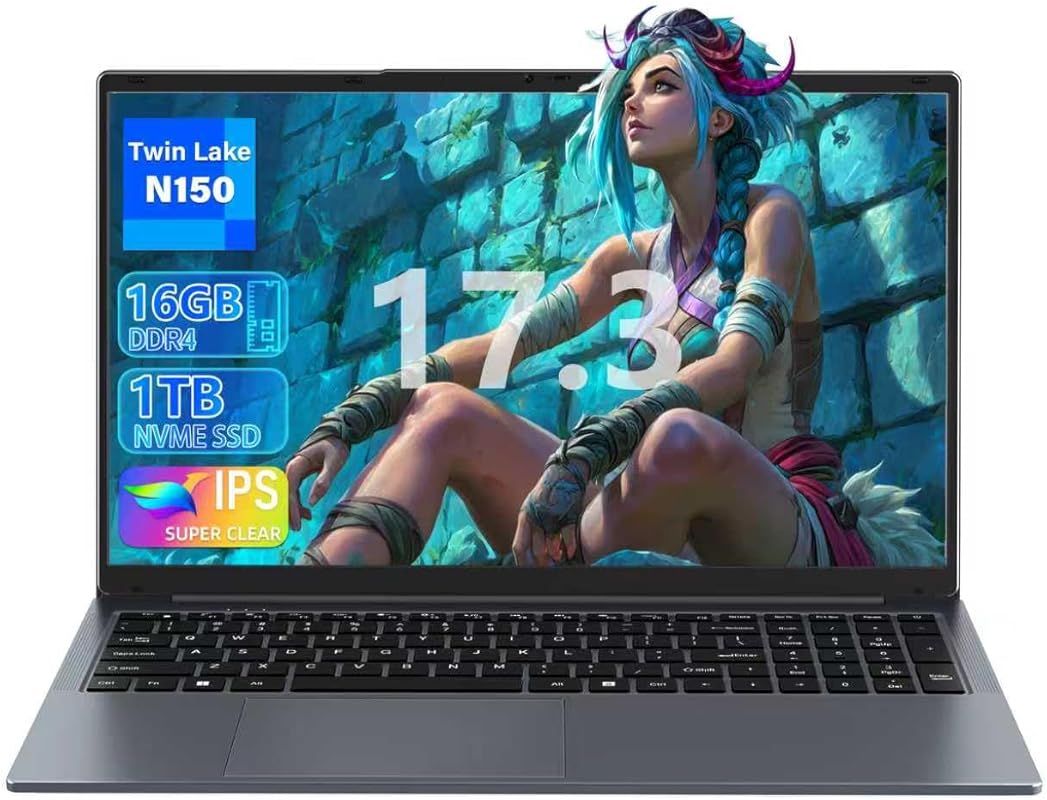
This 17.3-inch laptop, like the others, positions itself as a laptop for Blender, primarily appealing to users looking for a larger screen and ample storage at an accessible price point. It features an N150 CPU, 16GB RAM, and a 1TB NVMe SSD, which are commendable specifications for general computing. The larger display is certainly a plus for productivity, but the limitations of the N150 processor for intensive Blender 3D tasks remain.
Key Features That Stand Out
- ✓ Expansive 17.3-inch IPS screen with Full HD (1920×1080) resolution for a wider visual experience.
- ✓ Powered by the Twin Lake N150 processor (4C/4T, up to 3.6GHz) for basic multitasking.
- ✓ Comes with 16GB of RAM and a fast 1TB NVMe SSD for quick boot-ups and file transfers.
- ✓ Features integrated graphics suitable for everyday display tasks, but not heavy GPU rendering.
- ✓ Pre-installed with Windows 11, offering a modern operating system.
Why We Recommend It
We recommend this laptop mainly for users who prioritize screen real estate and storage for general computing and media consumption, along with very light, introductory Blender exploration. The large 17.3-inch display can enhance productivity for tasks like document editing or browsing. However, it’s essential to manage expectations regarding its capacity for intensive Blender rendering or complex 3D modeling due to the entry-level N150 CPU and integrated graphics.
Best For
This laptop is best for users seeking an affordable large-screen laptop for productivity, media consumption, and learning the absolute basics of Blender, where complex scenes or fast renders are not a priority. It’s an excellent value for a large-screen general-purpose device.
Pros and Cons
Pros:
- Large 17.3-inch Full HD IPS display offers immersive viewing and productivity.
- Generous 16GB RAM and 1TB NVMe SSD provide excellent storage and responsiveness.
- Good choice for those needing an affordable laptop with a big screen.
- NVMe SSD offers faster data speeds than traditional SATA SSDs.
Cons:
- N150 processor is extremely weak for demanding Blender operations.
- Lack of a dedicated graphics card severely limits GPU rendering capabilities in Blender.
- Not suitable for professional 3D animation, complex simulations, or heavy texturing.
Customer Reviews
Customer Review: The media could not be loaded.I’m impressed with this laptop! The battery lasts a long time, the display is bright and sharp, and it’s very easy to use. Everything works perfectly.
Customer Review: This 17.3-inch laptop offers good value for those prioritizing screen size and productivity. The IPS display’s 1080p resolution and wide viewing angles are ideal for presentations or collaborative work. Colors appear natural, though creative professionals might want a higher gamut panel. If you nee
Complete Buying Guide for Best Laptop For Blender
Essential Factors We Consider
When searching for the best laptop for Blender, several key components dictate its performance in 3D modeling, rendering, and animation. A powerful CPU (processor) is fundamental for tasks like simulations, physics, and general scene manipulation. Look for multi-core processors from Intel (i7 or i9, 12th gen or newer) or AMD (Ryzen 7 or Ryzen 9, 6000 series or newer). The GPU (graphics card) is arguably even more critical, especially for real-time viewport performance and GPU rendering (Cycles X, Eevee). NVIDIA GeForce RTX (30-series or 40-series) or AMD Radeon RX (6000 or 7000 series) with at least 8GB of VRAM are highly recommended. For RAM, 16GB is a bare minimum for light scenes, but 32GB or even 64GB is ideal for complex projects, ensuring smooth multitasking. A fast SSD (Solid State Drive) is crucial for quick boot times, faster loading of large project files, and overall system responsiveness. Aim for at least 512GB NVMe SSD, with 1TB or more being preferable. Lastly, a good quality display with accurate color reproduction (IPS panel) is vital for artists to see their work precisely.
Budget Planning
Your budget will significantly influence the kind of Blender laptop you can acquire. Entry-level laptops (under $700) might offer basic functionality for learning Blender, but they will struggle with anything beyond simple scenes and will have very slow rendering times. Mid-range laptops ($700 – $1500) typically offer a better balance, often featuring a decent CPU and an entry-level dedicated GPU (like an RTX 3050/4050), making them suitable for hobbyists and students. For serious 3D artists and professionals, a high-end laptop ($1500+) is usually necessary. These machines come equipped with powerful processors, high-end graphics cards (RTX 4070/4080/4090), abundant RAM, and large NVMe SSDs, allowing for efficient 3D modeling, complex simulations, and rapid rendering. Consider your primary use case and how much you’re willing to invest in your creative tool.
Final Thoughts
Choosing the best laptop for Blender is an investment in your creative potential. While there are budget-friendly options that can introduce you to the software, serious 3D artists will benefit immensely from higher-spec machines with dedicated GPUs, robust CPUs, and plenty of RAM. Always prioritize these core components over flashy aesthetics. Remember that the laptops reviewed (products 1, 2, and 5) with N150 processors are extremely entry-level and, despite their titles, are generally unsuitable for demanding Blender workflows, being more geared towards basic computing. For anything beyond the most rudimentary learning, you’ll want to look for laptops with powerful Intel Core i7/i9 or AMD Ryzen 7/9 processors and NVIDIA RTX or AMD Radeon RX dedicated graphics cards.
Frequently Asked Questions
Q: What are the absolute minimum specs for running Blender smoothly?
A: For merely running Blender, you need a 64-bit dual-core processor with 4GB RAM and a graphics card with 2GB VRAM. However, for a genuinely smooth experience, especially for 3D modeling and light rendering, we recommend at least an Intel Core i5 or AMD Ryzen 5, 16GB RAM, and a dedicated GPU with 4GB-6GB VRAM (like an NVIDIA GTX 1660 or RTX 3050).
Q: Is a gaming laptop good for Blender?
A: Yes, absolutely! Gaming laptops are often among the best laptops for Blender. They typically come equipped with powerful multi-core CPUs, high-performance dedicated GPUs (especially NVIDIA RTX series which are excellent for Blender’s Cycles renderer), and ample RAM. These specifications translate directly into excellent performance for 3D modeling, animation, and rendering tasks.
Q: How much RAM do I need for Blender?
A: While 8GB of RAM is the bare minimum, for comfortable Blender usage, 16GB is a good starting point for smaller projects. For complex scenes, high-resolution textures, fluid simulations, or professional-level work, 32GB of RAM is highly recommended, and 64GB can be beneficial for very large-scale projects.
Q: Is GPU or CPU more important for Blender rendering?
A: For Blender’s Cycles renderer, a powerful GPU (especially NVIDIA RTX cards with CUDA/OptiX support) is generally much faster and more efficient for rendering than a CPU. However, the CPU remains crucial for other tasks like scene setup, physics simulations, modifiers, and general viewport responsiveness. Ideally, you want a strong combination of both, but for faster rendering, invest more in the GPU.
Q: Can I use an integrated graphics card for Blender?
A: While Blender can technically run with integrated graphics (like Intel UHD or Iris Xe), the experience will be severely limited. You will struggle with anything beyond very basic 3D modeling, and rendering will be extremely slow. For any serious work, a dedicated graphics card is essential for smooth viewport performance and efficient rendering.
Finding the best laptop for Blender is all about matching the right hardware to your specific creative needs and budget. We hope this roundup has provided clear insights and helped you navigate the options. Remember that investing in a capable Blender laptop is an investment in your productivity and creative freedom in the world of 3D art. Don’t compromise on the core components like the CPU, GPU, and RAM if you’re serious about your 3D modeling and rendering journey. Ready to power up your creativity? Click on the “Check Price on Amazon” buttons above to explore these options and find the perfect machine to bring your Blender visions to life!